Managing a force is not a choice between administration, diplomacy, and war. Resources and officers developed in your cities support negotiations and deployments, while battle results reshape your territory and the next round of city management.
1. Review each city’s current state
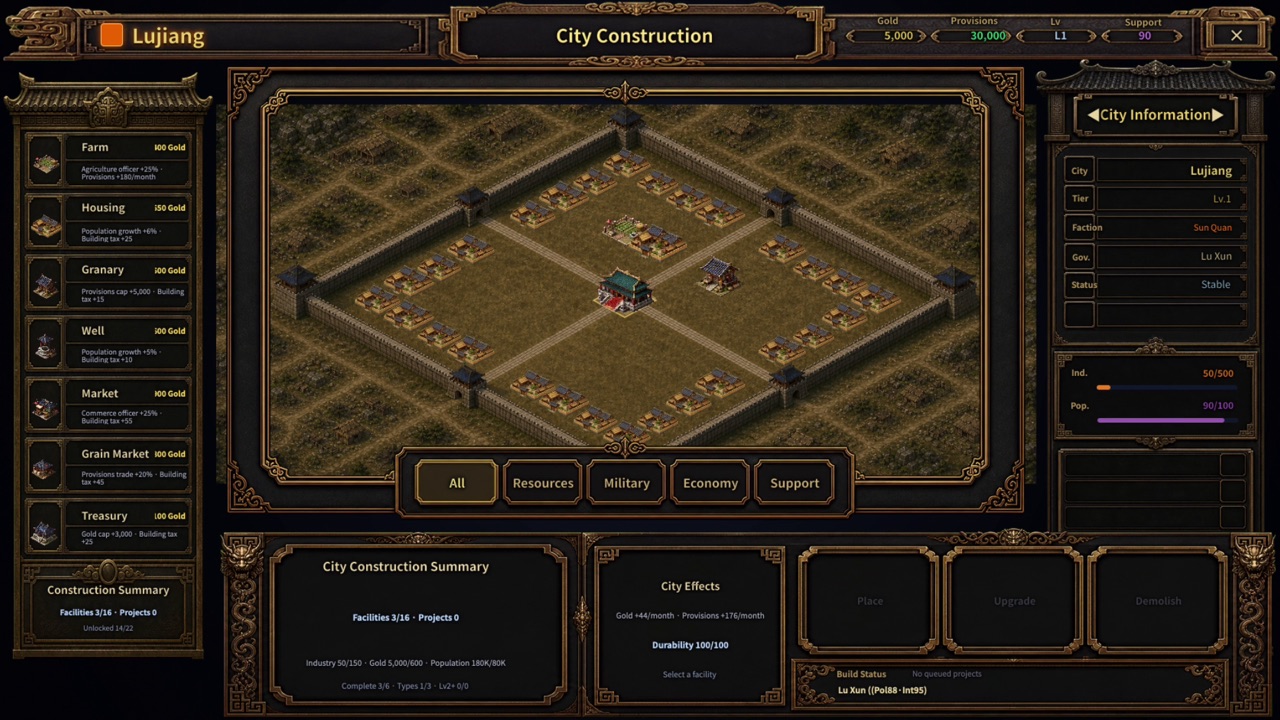
Check your starting city’s gold, provisions, troops, and administration indicators. Appointments and construction help build the resources needed to sustain a war. The server rechecks requirements before applying administration and construction commands.
2. Understand nearby relationships
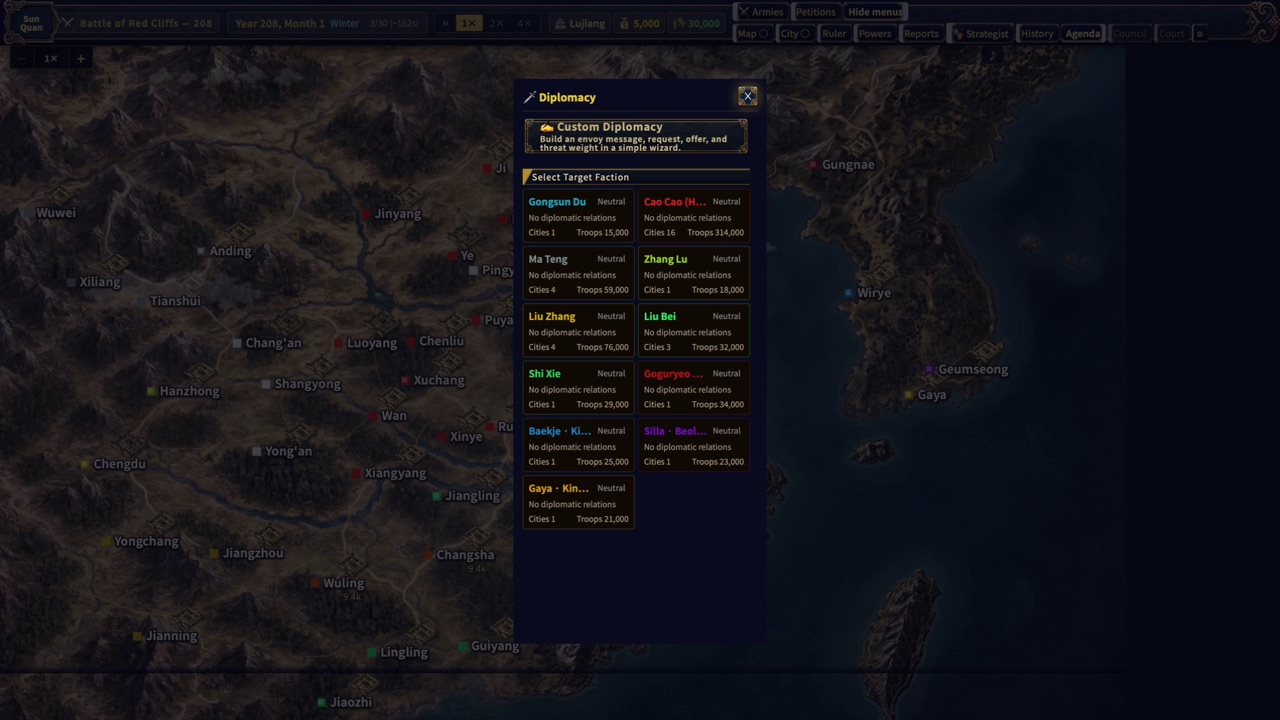
Neighboring forces are not automatically enemies. Review alliances, truces, neutrality, and war, then send an envoy when you need to propose a change. Diplomacy that requires both sides takes effect only after the other force accepts.
3. Move toward an adjacent objective
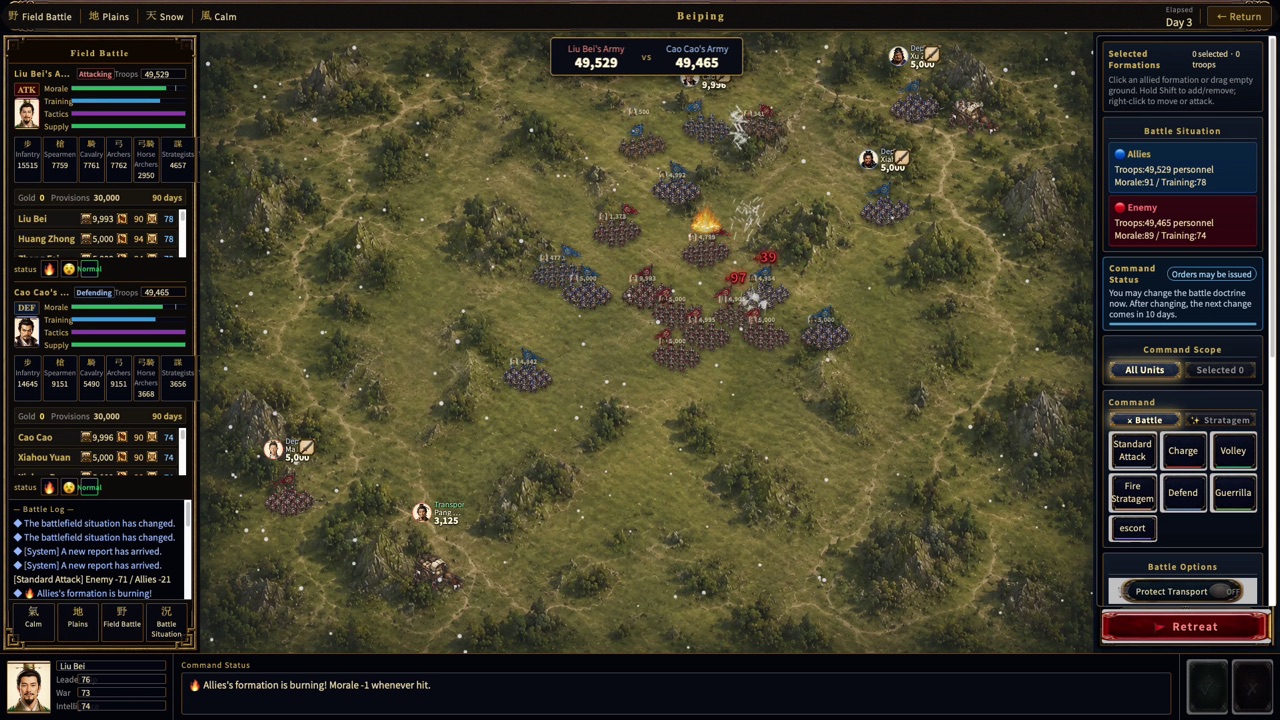
Choose an army’s destination on the strategy map and prepare for the engagement. The server validates the current world state, route, and command authority. When a clash begins, you can enter its dedicated battlefield to review the situation and issue commands to formations that need your attention.
4. Use the outcome in your next plan
After battle, changes to troops, officers, resources, and territory return to the strategy map. Review losses and new front lines, then adjust administration, diplomacy, and the next deployment.